What “Mild” Actually Means in a Cleanser
It’s a good word. It should come with an explanation.
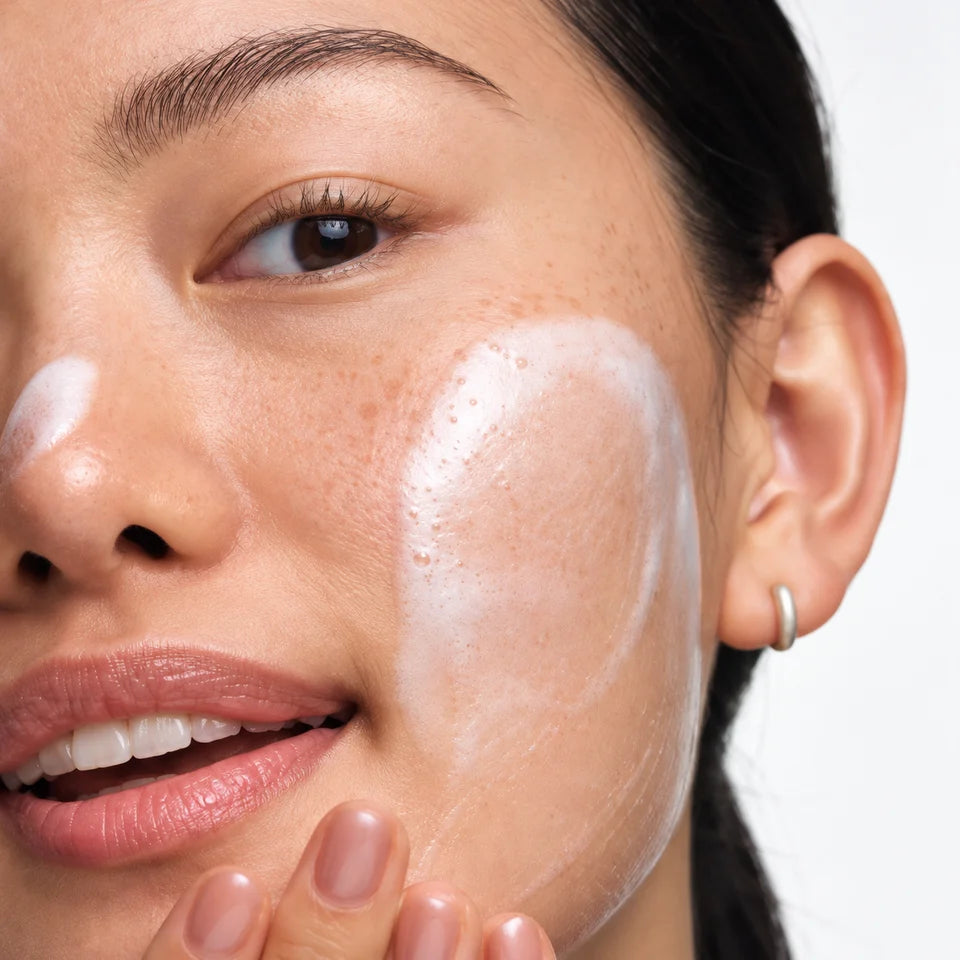
Mildness is about how the finished cleanser behaves on your skin: how likely it is to leave you dry or irritated. The surfactant blend, the other ingredients, pH and the way you use it all feed into that. No single one of them settles it.
Mild. Four letters, a lot of trust.
You read it and relax a little. Comfortable enough for every day. Won’t leave your skin feeling worked over.
That’s a reasonable expectation. But the word doesn’t say why this cleanser earns it. A familiar ingredient gives you one clue, a pH number gives you another, and neither covers the whole product. Before you hand over your trust, look for the explanation behind it.
Mildness belongs to the finished formula
Judging a cleanser by one ingredient is like judging a dish because you know it contains olive oil. You’ve learned something real. You still don’t know the dish.
Cleansing ingredients don’t only meet the oil you want gone. They also interact with skin proteins and lipids, and how much depends on the formulation around them. A surfactant known for gentler formulas tells you about a design choice. What surrounds it, and how it all comes together, decides the result.
So ask about the whole wash. How was it designed, and how was it evaluated?
pH matters, with context
A precise number looks convincing on a box. Skin’s surface is naturally acidic, so a skin-compatible pH is a sensible target. But it’s one input among several.
A study comparing cleansing formulations found that matching skin’s pH didn’t by itself make a product milder. The ingredients, and how they behaved at that pH, mattered too. Read the study.
When a pack leads with a pH figure, keep reading. Look for what the number sits on top of: the cleansing base and the full formula.
Three questions that give “mild” some weight
What supports the claim? It might be an explanation of formulation choices, test results on the finished product, or user feedback. Each is a different kind of information. A formulation explains the design. Testing shows what happened under set conditions. Feedback is one person’s experience.
What was actually measured? If testing is mentioned, find the outcome: measured dryness, clinician-assessed irritation, or how comfortable participants said they felt. Those answer different questions, and a good explanation tells you which one was asked.
Who used it, and how? A rinse-off wash tested as directed tells you about that use. It can’t speak for every skin type or every way of applying it.
Three questions will get you further than a pile of reassuring adjectives.
Reaching for moisturiser doesn’t mean the cleanser failed
Using moisturiser after you wash isn’t evidence the cleanser was harsh. It’s ordinary care. The American Academy of Dermatology recommends it when skin is dry or itchy, and advises lukewarm water, gentle fingertips and no scrubbing. See the guidance.
Discomfort that keeps coming back deserves attention. But skipping moisturiser to see how long you last isn’t a test of mildness.
Where Mugtea starts
Mugtea pairs an SCI-led cleansing blend with glycerin, panthenol and allantoin. It has no added perfume or essential oil, and its formulation pH target is 5.4–5.9.
Those are the choices behind the wash and how it’s meant to feel. Weigh them alongside how it actually suits your skin. Mugtea is designed for daily cleansing, with normal, oily and combination skin in mind. Tolerance varies, especially on dry or reactive skin.
Use it as directed: the daily wash first, the optional two-minute pack later, and stop if irritation develops.
Hold “mild” to account
Next time a cleanser says mild, look for what’s behind it. An explained formulation. Evidence, where there is some. Clear instructions. And your own skin’s response, the one part you can check yourself.