Soap, syndets and SLS: what’s actually in your face wash?
Find the ingredients doing the washing, understand where SLS fits, and learn what a label can—and cannot—tell you.
Somewhere in a cleanser’s ingredient list is the group of ingredients that does the washing. The botanical on the front label usually isn’t part of it.
Soap is one kind of cleansing system. Syndet is a much wider one. SLS is a single ingredient that can sit inside a syndet. Once you see how they nest, labels get easier to read.
The short version
- Soap is made from fatty-acid salts and runs alkaline.
- Syndet means “synthetic detergent.” It covers many surfactants and blends.
- SLS and SLES are single surfactants. A sulfate-free claim or a pH number doesn’t prove mildness on its own.
What the cleansing base is
Surfactants lift oily residue off your skin so water can rinse it away. They also influence how a product spreads and how it foams.
The rest of the tube has other jobs: texture, preservation, pH, conditioning. A formula can contain cucumber extract and still get almost all its cleaning from the surfactants, so look for those first.
Why formulas use blends
One surfactant name rarely explains how a wash feels. Formulators mix surfactants to tune spread, lather and irritation. Pairing anionic surfactants with amphoteric or nonionic ones can help adjust irritation potential.
Four surfactants don’t add up to four times the strength, and a short list isn’t automatically gentle. The list gives you clues about the design of the cleanser. How well that design works is a separate question.
Soap versus syndet
Soap comes from reacting fats or oils with an alkali. Its cleaning ingredients are fatty-acid salts, such as Sodium Palmate or Sodium Cocoate, and it typically sits around pH 9 to 10.
Syndet systems use non-soap surfactants: isethionates, taurates, glutamates, sulfates. No single recipe defines the category.
Shape doesn’t tell you which is which. A bar can be a syndet, a liquid can contain soap, and some products mix both. Read the ingredients first.
| What to check | Soap-based | Syndet-based |
|---|---|---|
| Cleansing ingredients | Fatty-acid salts (Sodium Palmate, Sodium Cocoate) | Non-soap surfactants (Sodium Cocoyl Isethionate, Sodium Laureth Sulfate) |
| pH | Generally alkaline | Depends on the formula |
| Format | Bars or liquids | Bars, liquids, pastes |
| What the name can’t tell you | How the finished product feels on you | Whether it’s mild, effective or right for you |
Sodium Cocoate and Sodium Cocoyl Isethionate look like cousins, but the first is soap and the second is not. “Coco” and “sodium” alone won’t sort them, so use the full name.
Where SLS and SLES fit
Sodium Lauryl Sulfate (SLS) and Sodium Laureth Sulfate (SLES) are two different non-soap surfactants. Look up the exact ingredient name.
Dose, formula and contact time influence the effect. SLS is used as an irritant control in clinical testing. Prolonged patch exposure differs from briefly washing with a finished cleanser.
The same logic runs the other way: dropping sulfates doesn’t tell you the replacement blend is mild.
Does a skin-like pH make a cleanser gentle?
Not by itself. Matching skin’s pH doesn’t establish mildness. The complete formulation matters.
Skin’s surface is acidic, so pH counts, but it is one number. It tells you where the formula sits, not what the surfactants do once they touch you.
In one forearm study of four products, each group of 15 healthy people washed one forearm at least four times a day for a week. The alkaline soap raised skin pH and redness, and the syndet caused less damage. The study was small, short and about those products only, so it isn’t a ranking of every cleanser on every face.
Also watch how pH gets measured. A bar dispersed in water and a paste tested another way use different methods, which can make the printed numbers difficult to compare directly.
Two label fragments
Sodium Cocoate next to Glycerin is a soap ingredient and a humectant. The glycerin doesn’t turn the soap into something else.
A label that lists Sodium Laureth Sulfate among several non-soap surfactants has SLES inside a syndet system. That gives you the category, but not the proportions or whether it suits you.
After identifying the category, check the other cleansing ingredients, the directions and the brand’s explanation of the complete formula.
Reading one blend: Mugtea
Mugtea’s cleansing group is:
- Sodium Cocoyl Isethionate (SCI)
- Sodium Methyl Cocoyl Taurate
- Sodium Cocoyl Glutamate
- Coco-Betaine (a different ingredient from cocamidopropyl betaine)
Around that group, kaolin is included for excess-oil pickup, and salicylic acid is the exfoliating ingredient in the formula. Glycerin, propanediol, panthenol, allantoin and niacinamide handle conditioning.
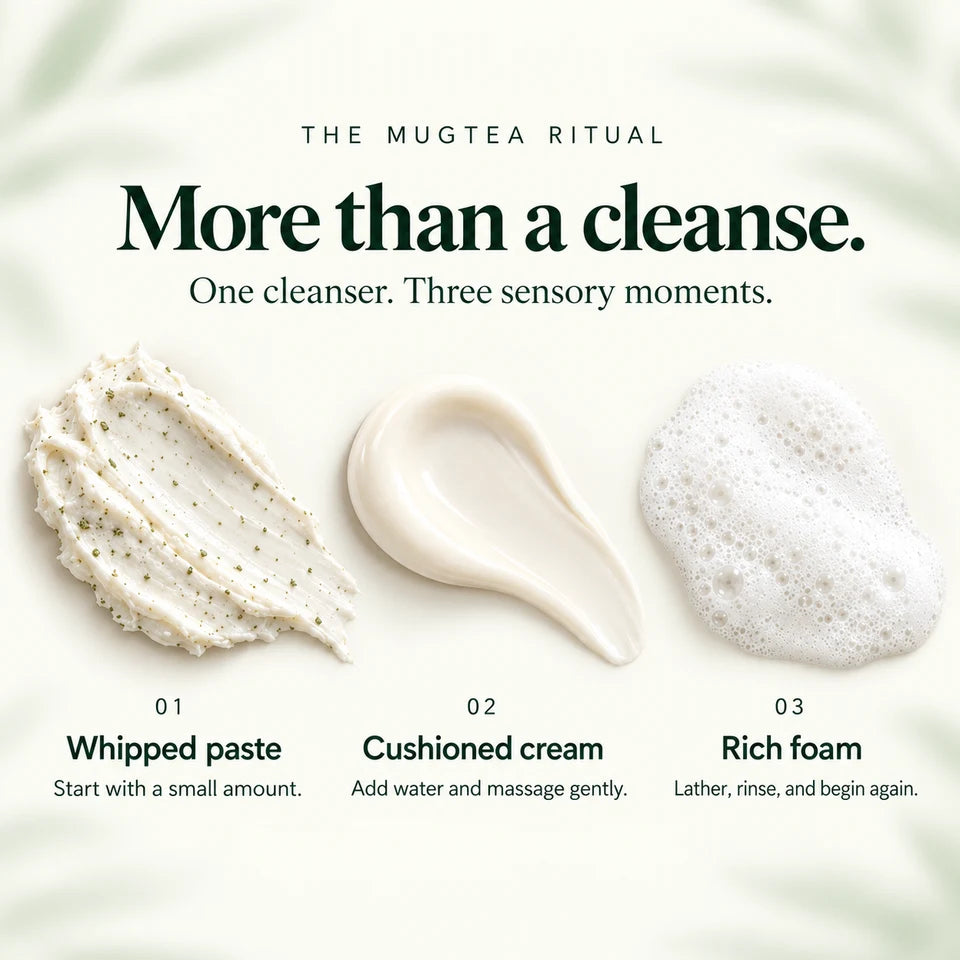
Mugtea’s formulation pH target is 5.4 to 5.9, set with skin’s acidic surface in mind. Mugtea is made for normal, oily and combination skin and has no added perfume or essential oil. It starts as a paste, turns creamy, then opens into foam.
Four questions for your next label
Which ingredients do the washing? Find the group, not the headline botanical.
What does the brand explain? Look for clear roles and directions, with evidence behind any performance claim.
What are you removing? Water-resistant sunscreen or long-wear makeup may need a first cleanse.
How does it feel afterwards? Persistent discomfort isn’t proof of a deep clean.
With Mugtea, the everyday use is the daily wash. For the optional pack, spread a thin layer on dry skin for two minutes, then add water, massage it into cream and foam, and rinse thoroughly. It doesn’t need to dry hard.
Whichever cleanser you pick, use lukewarm water and gentle fingertips, and rinse properly.