What Actually Does the Cleansing in Your Cleanser?
You noticed the name. The blend is where the work happens.
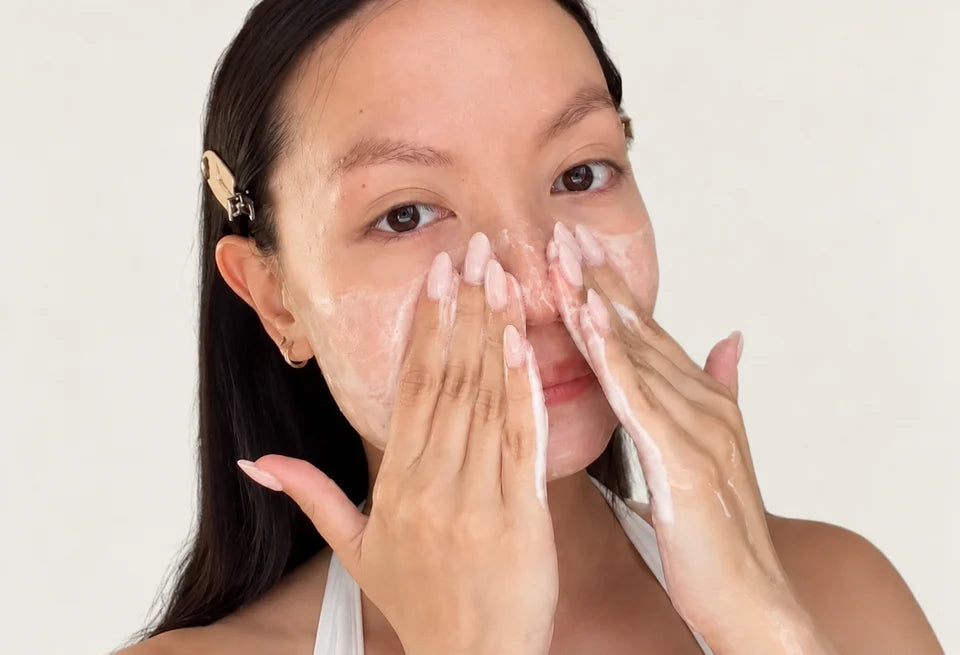
A cleanser is a team. Surfactants do the washing, clay picks up oil, an exfoliating acid works the surface, and conditioning ingredients take the edge off. Once you know who does what, a label stops being a list of names. Mugtea is a handy example.
You know the name. Do you know the job?
Niacinamide. Centella. Salicylic acid.
One of those probably made you turn the tube over. You’ve used it, read about it, had it recommended by someone whose skin you trust.
Fine. That’s a start. But here’s what usually happens next: you recognise a name, recall what it’s good for, and decide the whole product must be good for that. The skipped step is the one that matters. What is this ingredient actually doing in this formula?
In a cleanser, the headline ingredient is often an exfoliant or a conditioner. The cleansing itself is done by names further down the list, the ones nobody prints on the front of the tube.
Start with the surfactants
They’re the reason it’s a cleanser. Surfactants break oily residue into something water can carry off, and a formula usually blends several to tune how it cleans, lathers and feels.
Mugtea uses four: sodium cocoyl isethionate, sodium methyl cocoyl taurate, sodium cocoyl glutamate and coco-betaine. Sodium cocoyl isethionate, SCI for short, leads the blend and is behind the creamy lather.
Don’t memorise them. Just know they’re a group, and that group is the washing system. Spot it, and the rest of the label gets easier to read.
Everything else has its own job
Microfine kaolin is the clay, there for excess oil. Salicylic acid does the exfoliating. Glycerin, panthenol and allantoin are the comfort ingredients. Niacinamide, the botanical extracts and madecassoside round out the formula.
Some of these do more than one thing, because cosmetic chemistry rarely stays in one lane. Treat this as a rough map, not the full declaration.
Why bother? Because it changes how you compare. Take a greasy-feeling T-zone. The surfactants clean it and the kaolin picks up oil. Surface texture is a separate matter, and that’s salicylic acid’s job. “Contains salicylic acid” describes one role on a team of several. It says nothing about the cleansing base underneath.
Read the exact name
Near-identical names can be different materials. Mugtea contains tea tree leaf extract, not tea tree essential oil. Coco-betaine is not cocamidopropyl betaine. When you look an ingredient up, search the name exactly as printed, then check that the page you land on is about that material and not a cousin.
The botanical side of Mugtea is mugwort, centella, tea tree leaf and cucumber extracts, with madecassoside added separately. There is no added perfume or essential oil.
A list shows what’s inside. It doesn’t show how it behaves.
Mildness and performance come from the finished formula and how the pieces interact. No single name delivers them, and neither does a pH figure on its own. Published research on cleansing systems makes the same point.
In Mugtea’s case, the finished form is a structured paste. Add water and it softens into cream. Keep massaging and it opens into foam.
Four questions for the next label
Which ingredients make up the cleansing system? What are the other highlighted ingredients there to do? Is the ingredient you’re reading about the one actually listed? Does the brand explain how the whole formula is meant to work?
For Mugtea, the answers are an SCI-led blend, microfine kaolin, salicylic acid and conditioning ingredients, built for daily cleansing on normal, oily and combination skin.
